
'We are not able to manufacture even low-end products as cheaply as China.' 'We are not buying Chinese goods today out of any love for China.'

However, despite the surge, the average income of banking correspondents has taken a beating due to the low value of transactions.

Like everything else, the structure of banks may change, and banks may depend more on digital technologies and artificial intelligence for dealing with both their customers and employees.

The trade deal, officials say, can lead to an effective trading bloc against the China-led Regional Comprehensive Economic Partnership.
Industry fears waiver of interest on interest would distort credit culture, may encourage borrowers who can pay to defer repayment.

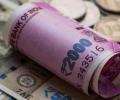
This includes an infrastructure push which may lead to the government spending more than its budgeted capital expenditure for 2020-21. There are also discussions on increasing the scope and quantum of direct cash transfers to the beneficiaries who need it the most.
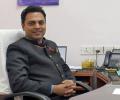
'Given the 50 per cent or thereabouts increase in borrowing that has been announced, it is a reasonable estimate to say that at this time, an increase of 1.7-1.8 per cent on the 3.5 per cent budgeted fiscal deficit target is being anticipated,' Chief Economic Adviser Krishnamurthy Subramanian said on Friday.

Following suggestion from Minister for Roads Nitin Gadkari, Centre seeks ideas from IRDAI and General Insurance Council on feasibility of providing insurance cover for retrenchment.

Unlike other health insurance policies, which mostly covers hospitalisation expenses alone, the specialised cover is likely to include the cost of treatment during quarantine and payment of cash for incidental expenses.
'It is a package for a new self-reliant India.'
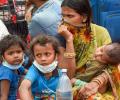
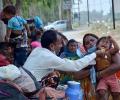
For states like West Bengal, Bihar, Odisha, Jharkhand and Uttar Pradesh, where migration is high, the return of workers could be as much an opportunity as a liability. All states have launched portals to register migrant workers; additional fields like nature of employment and remuneration in the past 2-3 years are being added to help in skill mapping.

This comes at a time when the COVID-19 crisis is expected to derail the government's revenue maths for 2020-21, hitting the mop-up from sources such as taxes and divestment.

'States have done a tremendous job of identifying health facilities for COVID-19 care and equipping them well.'

For smaller MFIs, resuming operations is more difficult because they haven't got any fresh bank credit sanctioned from their lenders.

These conditions are implementation of the 'One Nation, One Ration Card' scheme, ease of doing business, power sector reforms, and urban local body reforms.
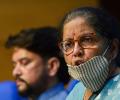
Later, there may be some tax relief aimed at the middle class and measures to benefit the sectors worst hit by Covid-19 and the resultant nationwide lockdown.

There could be multiple measures announced in quick succession, not only by the finance minister but also other ministers regarding their respective sectors, and by the Reserve Bank of India. The total size of these announcements could rival that of other G-20 nations as a percentage of GDP.
In Sandelerbil village alone in the Hingalgunj block in the Sundarbans, around 36 families from the Scheduled Caste community migrated from Tamil Nadu in March, where they had been working in a gas oven factory. A majority awaits dues promised but not paid. The story is no different in the villages of Manipur, Atapur, and Amtoli under the Sandeshkhali block in the Sundarbans.
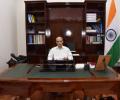
The finance minister is ready to present a second financial package. The Centre has ruled out a mega stimulus and will rely on targeted, incremental packages. Industry is clamouring for a bailout, the liquidity upheaval in capital markets is nowhere close to being sorted out, and all budgetary forecasts now stand irrelevant, reports Arup Roychoudhury.
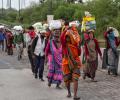
The beneficiaries of the second set of announcements are expected to be micro, small, and medium enterprises, farmers, women, poor, migrant workers, and other marginalised sections of the society, reports Arup Roychoudhury.
 © 2025 Rediff.com - Investor Information - Advertise with us - Disclaimer - Privacy Policy - Sitemap - Feedback - About us - Terms of use - Grievances